Calm Your Mind: Guided Audio Meditations for Anxiety
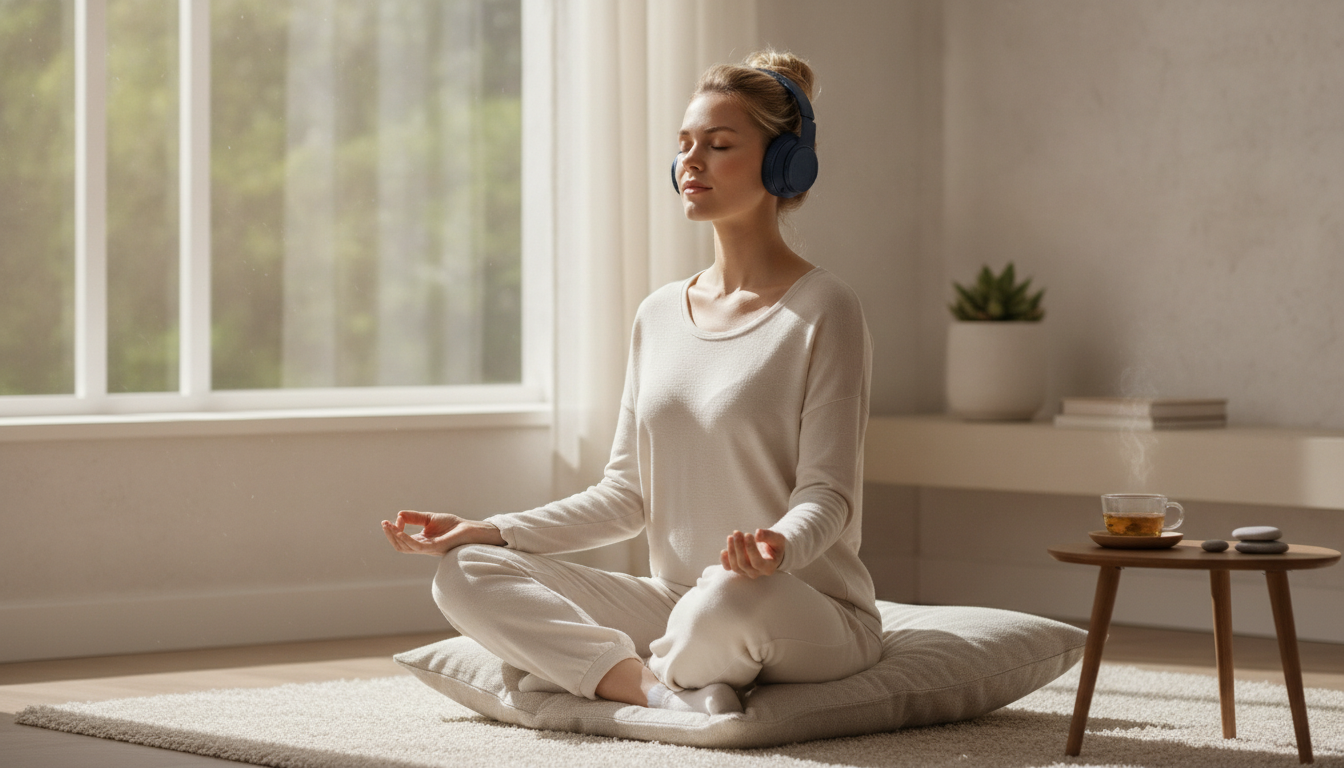
Calm Your Mind: Guided Meditation Series for Anxiety Relief
Racing thoughts, tight shoulders, and a constant sense of “on edge” can make even simple days feel heavy. Calm Your Mind: Guided Meditation Series | Audio Course | Anxiety Relief Meditation is an audio-guided meditation series designed to help settle the nervous system, ease anxious spirals, and build a repeatable routine that fits real life—whether there are 5 minutes available before work or a longer session at night.
While meditation isn’t a cure-all, many people use mindfulness practices as a practical, skill-based way to relate differently to stress. For an evidence-based overview of meditation’s effectiveness and safety, see the National Center for Complementary and Integrative Health (NCCIH) guide. If anxiety is persistent or intense, it can also help to review reputable resources from the National Institute of Mental Health for symptoms and treatment options.
Who this guided audio series is for
- People experiencing worry loops, restless evenings, or stress that lingers after the day ends
- Beginners who prefer clear spoken guidance instead of silent meditation
- Anyone who wants a simple, repeatable practice for grounding during anxious moments
- Busy schedules: audio sessions that can be used at home, on a walk, or while traveling (as long as it’s safe to listen)
- Those who want structure: a series format that supports consistency rather than random one-off sessions
This series is especially helpful when decision fatigue is high—when even choosing what to do for self-care feels like “one more task.” With a guided track, the next step is already laid out.
What to expect from the sessions
- Guided practice that directs attention toward breath, body sensations, and gentle mental reframing
- A calming pace that supports relaxation without demanding “perfect focus”
- Practical cues for returning attention when the mind wanders (a normal part of meditation)
- A routine-friendly format: sessions can be repeated as often as needed, especially during high-stress weeks
- A supportive tone that emphasizes steadiness, safety, and self-compassion
Many anxiety spikes come with an urgent feeling that something must be “solved” immediately. A guided practice offers a different pathway: come back to the body, soften the breath, and let the mind settle enough to respond rather than react.
Simple routine: how to use the series for the best results
- Choose a consistent time window: morning for steadiness, midday for reset, or evening for winding down
- Start small: 5–10 minutes daily can be more sustainable than occasional long sessions
- Pair with a cue: after brushing teeth, before checking messages, or right after getting into bed
- Keep expectations light: the goal is to practice returning to the present, not to “empty the mind”
- Repeat favorites: if a specific session helps, replay it for several days to build familiarity and ease
Quick practice plan for anxious days
| Moment | What to do | Why it helps |
|---|---|---|
| Morning (2–10 min) | Play a grounding session before the day begins | Sets a calmer baseline and reduces anticipatory worry |
| Midday (3–8 min) | Short reset session + slow breathing | Interrupts stress buildup and restores focus |
| Evening (5–15 min) | Wind-down session in low light | Signals safety to the body and supports sleep readiness |
| During a spike (1–5 min) | Pause, sit or stand still, follow guidance for breath/body | Helps reduce panic momentum and re-anchor attention |
Why guided meditation can feel easier than going it alone
- External guidance reduces decision fatigue (“What should I do now?”) when anxiety is high
- A steady voice can serve as an anchor when thoughts feel loud or scattered
- Guidance provides gentle structure: noticing sensations, labeling thoughts, and returning to the breath
- Consistency becomes simpler when the next step is already laid out
- Many people find it easier to practice self-compassion when they hear it modeled in the guidance
Instead of trying to “win” against anxious thoughts, guided meditation trains a quieter skill: noticing what’s happening, then choosing where attention goes next. Over time, that can make anxious moments feel less controlling—even if they still show up.
Tips for creating a calmer listening space
For some people, combining an audio session with a low-pressure, hands-on activity can also help discharge nervous energy. A focused build can become a gentle “attention anchor” when it’s hard to sit still, such as the DIY Tower Bridge 3D Wooden Puzzle Kit with LED Light—useful as a screen-free wind-down after a session or on weekends when you want calm structure.
Product details at a glance
If a consistent, guided approach feels like the missing piece, explore Calm Your Mind and keep a couple of favorite tracks easy to access for mornings, midday resets, and nights when the mind won’t slow down.
FAQ
How often should guided meditation be used for anxiety relief?
Most people do best with a realistic baseline of “most days,” even if it’s just 5–10 minutes. Consistency matters more than duration, and repeating the same track for a week is a perfectly solid approach.
What if the mind keeps wandering during the session?
Wandering is normal; noticing it is part of the practice. Each time you gently return to the breath, body, or the guide’s voice, you’re building the core skill—attention that can come back on purpose.
Can guided meditation replace therapy or medication for anxiety?
Guided meditation can be a supportive tool, but it isn’t a substitute for professional care when symptoms are persistent or severe. If you’re in treatment, discuss any changes to therapy or medication with a qualified clinician.










Leave a comment